
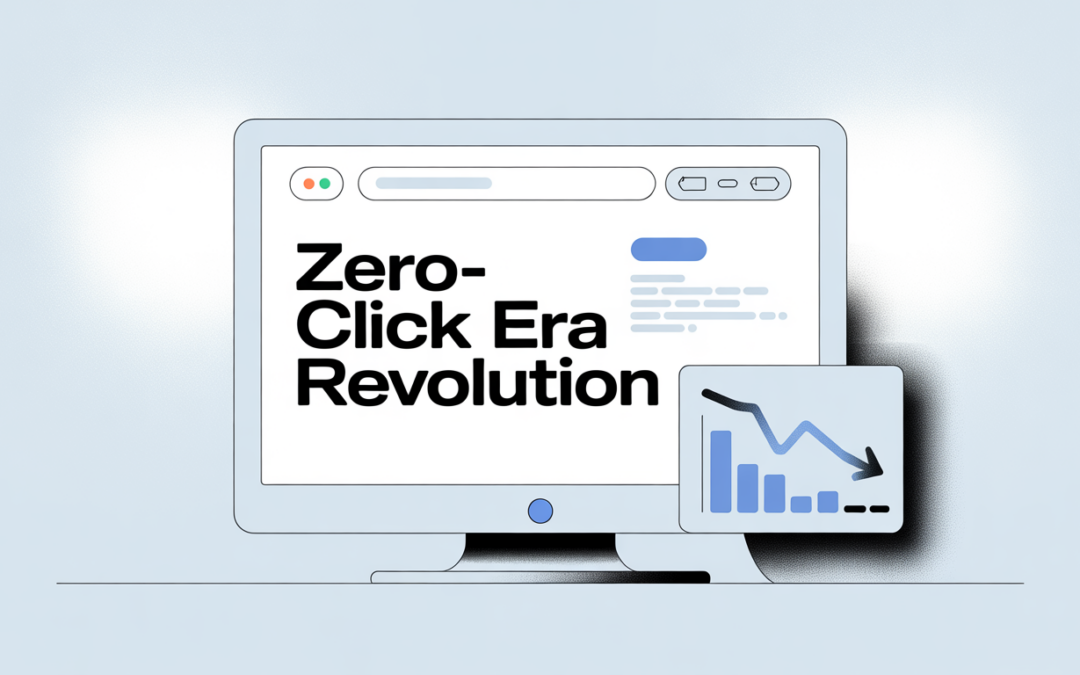
Why Traditional SEO No Longer Works in the Zero-Click Search Era
For years, search engine optimization followed a predictable formula: target keywords, rank on page one, earn clicks, and convert traffic. That model powered blogs, businesses, and entire digital marketing strategies. But search has changed—dramatically.
Today, a growing percentage of searches end without a single click. Users get answers instantly on the search results page itself. This shift, commonly called the zero-click era, has quietly broken many traditional SEO assumptions.
The problem isn’t that SEO is dead. The problem is that SEO built only for clicks is no longer enough.
The Original Promise of SEO: Rankings Lead to Traffic
Traditional SEO was designed around one core belief: higher rankings equal more visitors.
Marketers optimized content to appear as blue links on search engine results pages. Success was measured using:
- Keyword rankings
- Organic traffic
- Click-through rates
- Pageviews and sessions
As long as users had to click a website to get information, this system worked. But modern search engines no longer require that step.
The Rise of Zero-Click Searches
A zero-click search happens when a user’s query is fully answered directly on the search results page, eliminating the need to visit a website.
This happens through:
- AI-generated summaries
- Featured snippets
- Knowledge panels
- “People Also Ask” sections
- Local SEO packs and instant answers
In many cases, users now get what they need in seconds and move on—without clicking anything.
As these features occupy more screen space, organic listings are pushed further down, even when they technically rank well.
Why Ranking High No Longer Guarantees Traffic
One of the biggest failures of traditional SEO is its reliance on rankings as a primary success metric.
You can rank in the top three positions and still see declining traffic if:
- An AI overview answers the query first
- A featured snippet satisfies the intent
- A knowledge panel dominates the page
This disconnect has made rankings a vanity metric in many scenarios. Visibility no longer automatically translates into visits.
Keyword-Focused SEO Struggles in an AI-Driven World
Classic SEO relies heavily on keyword matching—choosing exact phrases and optimizing content around them.
Modern search, however, is far more conversational and intent-driven. AI systems analyze:
- Context
- Semantic meaning
- User intent
- Entity relationships
Instead of matching words, search engines now interpret meaning. Content written purely for keyword density often fails to surface in AI-driven answer systems.
User Behavior Has Fundamentally Changed
Searchers today expect instant clarity.
They don’t want to:
- Scroll endlessly
- Open multiple tabs
- Read long pages for simple answers
AI-powered results deliver fast, summarized information, reshaping how people interact with search engines. This behavioral shift has reduced the value of click-dependent SEO strategies.
Traditional Metrics No Longer Tell the Full Story
Clicks, sessions, and traffic volume were once reliable indicators of SEO success. In the zero-click era, those metrics only show part of the picture.
A brand can:
- Appear prominently in AI answers
- Influence decisions
- Build authority
…without receiving a click.
That visibility still matters—but traditional analytics tools often fail to capture it.
SEO Is No Longer Just About Traffic
The role of SEO has expanded beyond driving visitors to a website.
Modern SEO must also focus on:
- Brand presence in answer layers
- Authority signals across the web
- Trust and expertise recognition by AI systems
Traffic is still valuable—but it’s no longer the only measure of impact.
The Shift Toward Visibility-First SEO
To adapt, SEO strategies must evolve from being click-centric to visibility-centric.
This means optimizing content so it can:
- Be referenced in AI-generated summaries
- Appear in knowledge panels
- Support instant answers and snippets
Content must be structured, clear, and authoritative—designed not just for users, but also for AI systems interpreting it.
Structured Content Matters More Than Ever
AI-driven search relies heavily on structure and clarity.
Successful content today emphasizes:
- Clear headings and logical flow
- Concise answers to specific questions
- Well-defined topics and entities
- Contextual depth rather than keyword stuffing
Without this structure, even high-quality content may be ignored by answer engines.
Traditional SEO Still Has Value—But It’s Incomplete
This doesn’t mean traditional SEO should be abandoned. On-page optimization, technical SEO, backlinks, and content quality still play important roles.
However, relying on them alone limits growth in a search environment where:
- Attention often ends on the results page
- AI mediates information before users see websites
SEO must now support both discovery and influence.
The New SEO Reality
Modern SEO operates on two layers:
1. Answer-Layer Visibility
Ensuring your brand and content are present where answers are generated, summarized, and displayed.
2. Traffic & Conversion Optimization
Capturing clicks when users want deeper information or are ready to take action.
Both layers are essential—and ignoring either creates blind spots.
Why Traditional SEO “Fails” in the Zero-Click Era
Traditional SEO struggles today because it:
- Was built for clicks, not instant answers
- Relies on outdated success metrics
- Focuses too narrowly on rankings
- Ignores AI-driven visibility
The failure isn’t in SEO itself—it’s in refusing to adapt.
FAQ (Human + SEO + AI-Friendly)
You can place these at the end of the blog and also reuse them for FAQ schema.
FAQ 1: Is SEO still worth investing in during the zero-click era?
Yes, SEO is still valuable—but its role has evolved. While some searches no longer generate clicks, SEO now helps brands gain visibility inside AI answers, featured snippets, and knowledge panels. The goal isn’t just traffic anymore; it’s influence, authority, and brand presence across search results.
FAQ 2: What is zero-click SEO and how is it different from traditional SEO?
Zero-click SEO focuses on optimizing content so it appears directly in search results through AI summaries, snippets, and instant answers. Traditional SEO primarily targets rankings and clicks, whereas zero-click SEO prioritizes visibility and trust even when users don’t visit the website.
FAQ 3: How can businesses adapt their SEO strategy for AI-powered search?
Businesses should focus on structured content, clear answers, topical authority, and entity-based optimization. Creating content that is easy for AI systems to interpret and reference is now just as important as ranking on page one.
Final Thoughts
The zero-click era isn’t the end of SEO. It’s a reset.
Brands that evolve beyond keyword rankings and traffic obsession—toward visibility, authority, and answer-layer presence—will continue to win.
Those who don’t will keep ranking… and wonder why no one is clicking.
Recent Comments